The Melbourne Binocular and Telescope Shop – SIDEREAL
Product has been added to your cart.
Voyager – Review
Diego Colonnello
My Journey So Far
I am an astrophotographer that started looking up with a camera on a Telescope around September 2016, my start on AP was like every other person, Didn’t know how an equatorial mount works, and had no idea about the celestial pole…
Two steps forward
My first experience with an observatory was with a NexDome, a Plastic Wonder, easy to assemble, rotation and shutter opening automated, all controlled by SGP, this set up started to raise my imaging level and step by step you want things to work over night and gather photons while sleeping…
Then, things started to happen, one night it was PERFECT, the next, nightmare, mount not parking, shutter not closing, meridian flip failed, or simply the focusing routine went bananas and everything fell apart…
I hate the case of constant “Downloading” that made me lose a complete night…
I started to go deep into settings, scripts, adding new devices such as Cloudwatcher, Dragonfly, new power supplies, energy backup, etc. …
But there’s always that one step back
Then I moved houses, sold the DOME (personal economy reasons)…
Next day I started to look at a disassembled shed with passion, thinking, how hard can it be to build a roll off roof…
I did it, cheap, easy to figure it out, Nice roll off roof on my backyard, all the toys…
It was the Same Software, I could not tame it, the Same Issues were causing problems… AGAIN…
The search for better software
So I started to look for other OPTIONS!!! (But I was low on money)
First I looked at other packages, Maxim, CCD Commander, The Sky X, etc. All of them industry standards but EXPENSIVE, and on top of that I needed a Director, a MANAGER to take care of the orchestra…
Enter ACP, CCD Autopilot, Maxpilote… Most of them needed someone from the above list and also more money on licenses and more complexity to the game…
Then…. the day came… looking for options, google is my friend and somehow I ended reading some posts on a forum and some guy asked something about VOYAGER software…
Wait, what?
After more google searching, I found this simple Webpage, downloaded a demo and off I went…
I met the paradise of astrophotography…
Somehow, an Italian astrophotographer wrote a piece of software that I immediately understood. The software was in English but the manual in ITALIAN… No problem, is so intuitive that I found my way around…
Learning and working with Voyager
Night 1…
First time EVER that I used something for astrophotography and it all worked…
For example…
Setting up equipment was a breeze, after reading the options I found all the right settings in one go: Telescope, Camera, Filter wheel, Flat panel, Cloud watcher, EVERYTHING fell on its place…
Then, something called ON THE FLY…
I found a way to tell the software what Target I wanted, then I created a simple sequence and after a Plate Solve and Sync, it was imaging!!!
This is nice!!!
So I moved on to check out Guiding, I was amazed to find RoboGuide, in short, is like having a person decide all the best settings and working wonders with PHD2… Amazing…
Next, Focusing… back then it was based on a star, the software has a feature called RoboFire… oh boy, hit a button and the software finds the right settings after running a routine where it sets the perfect curve… after that, every focusing routine was fast and precise…
(These days Voyager also has a mode called Local Field that sees the entire frame where the target is)
I was IMPRESSED….. all of this on the same night!!!!
It all worked like a charm
Night 2…..
Moving to the advanced stuff…
I started to use look at Viking, a piece of software from the same developer that controls Ethernet relay boards… I asked Leo if he could control the Dragonfly… wait for it, in a week he sent an update and Dragonfly was implemented… Even the inputs…
WHAT!!!!!????
I started to organize my ideas and make sense of the complete puzzle…
The tool, the DIRECTOR!!!! Dragscript!!!!!!
Dragscript is a super clever way of scripting, drag and drop commands in order to create a sequence of actions and decisions…
Took me 3 hours to test functions and sections of scripts divided in blocks… How to wait for astronomical darkness, how to fire up the relays on the dragonfly and how to call out a sequence…
ITS ALL WORKING… But wait
I needed the most important part…
Suspend and restart the session with the safety status from the cloudwatcher…
After realizing how the SUSPEND EVENTS AND EMERGENCY EVENTS work on Dragscript, I built my first complete Script…
The ultimate test
That night I was super happy it was not perfectly clear, patchy cloud sections coming my way, what better opportunity to test the whole thing…
Picture This… Its All Clear
About 10 pm, the script starts and confirms that astro darkness has began…
Then it continues on to connect to Dragonfly and rest of equipment
Goes on and Switched on Mount, Camera cooler, Observatory, focuser and telescope FAN
Opens the ROOF and waits for the REED SWITCH to report back the OPEN status… Brilliant!!!
Then it orders the mount to slew to a defined Alt AZ position and perform a Blind plate solve… It does
Following that it starts the sequence… this sequence instructs the mount to slew and
precisely point to a target…
Injects a Focusing routine and after a minute the complete setup is imaging…
I could only be impressed…
This is the best part!!!
The Cloud watcher detects clouds and immediately the roof closes
The mount stops tracking and the camera stays Cold, all in stand by… waiting…
15 minutes after… clear again… Cloudwatcher reports Safe and the resume events kick in…
Voyager opens the roof
Blind solves
Goes to target
Focusing routine and resume imaging…
Clouds passed by 3 more times… And 3 more times the story repeated…
What a beauty…
After all the sequence finished, the script ordered the Mount to Park… Close the roof, Warm up the camera and wait for 10 minutes…
Disconnect from equipment and then switch off the gear…
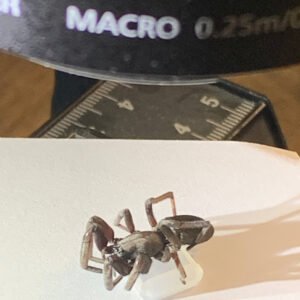
Macrophotography with a WeMacro Rail provides the depth of focus normal macro lenses can’t achieve. But managing lighting is still a difficult process, especially in such a cramped area. This article shows the effect of a couple of gadgets that help you see while posing your subject and diffuse harsh lighting during the exposure run.
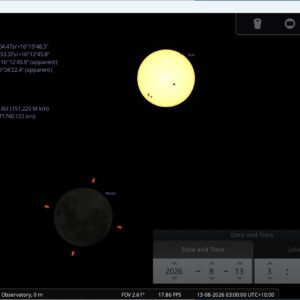
Eclipses have been seen as an omen by nearly every civilization. Being able accurately predict an eclipse would give a leader immense persuasive power. Ancient astrologers noticed that solar eclipses followed a pattern. Get it right and you’re in for a promotion. Get it wrong and things might not be so good.
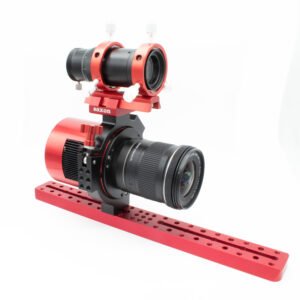
In this blog we put together a deep-sky, cooled camera and lens rig for wide-field autoguided imaging. We used components that fit together without having to drill new holes. This will go onto a go-to equatorial mount and give us long exposures with any camera lens. It also provides extra mounting points for autofocus motors, computers, or other components.