
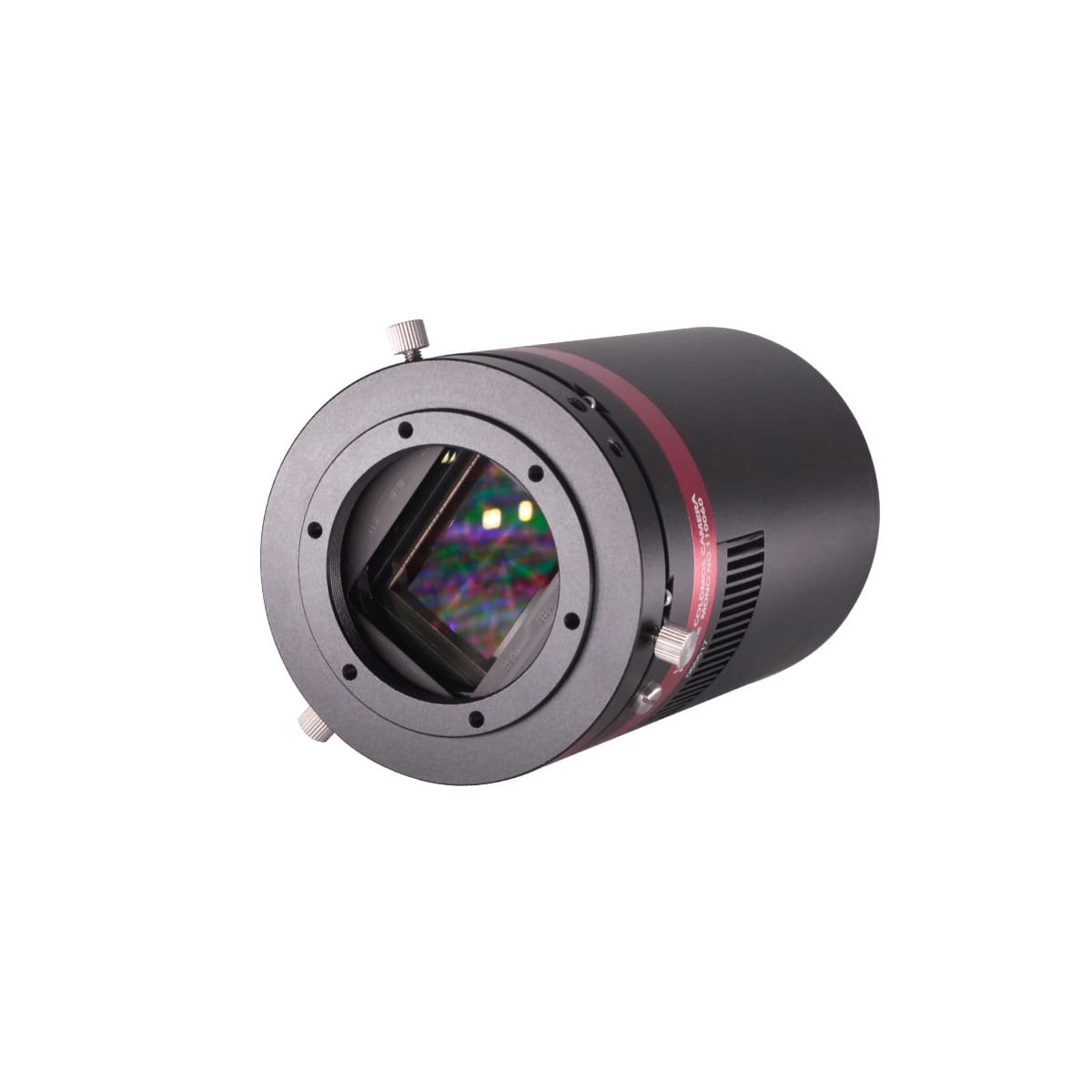
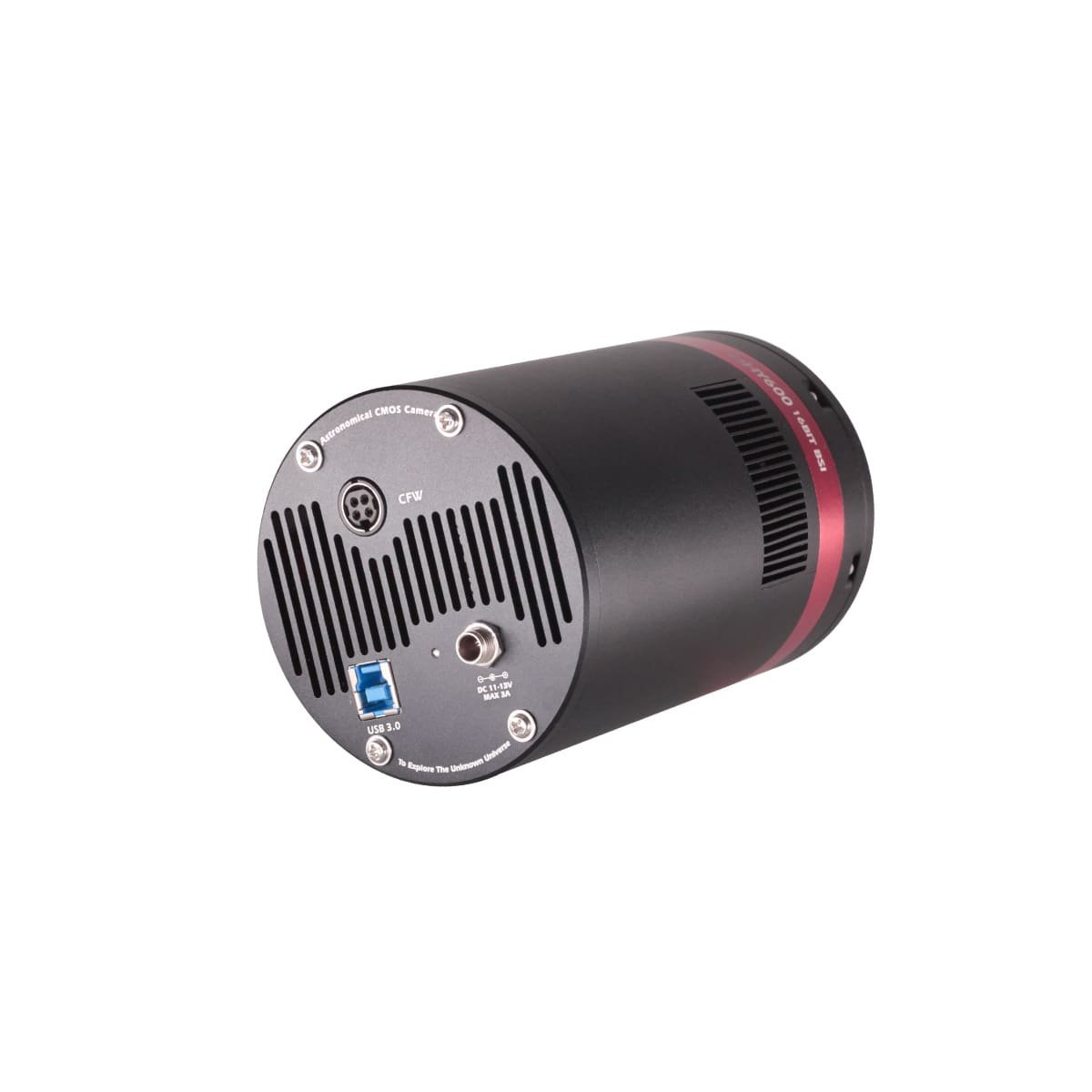
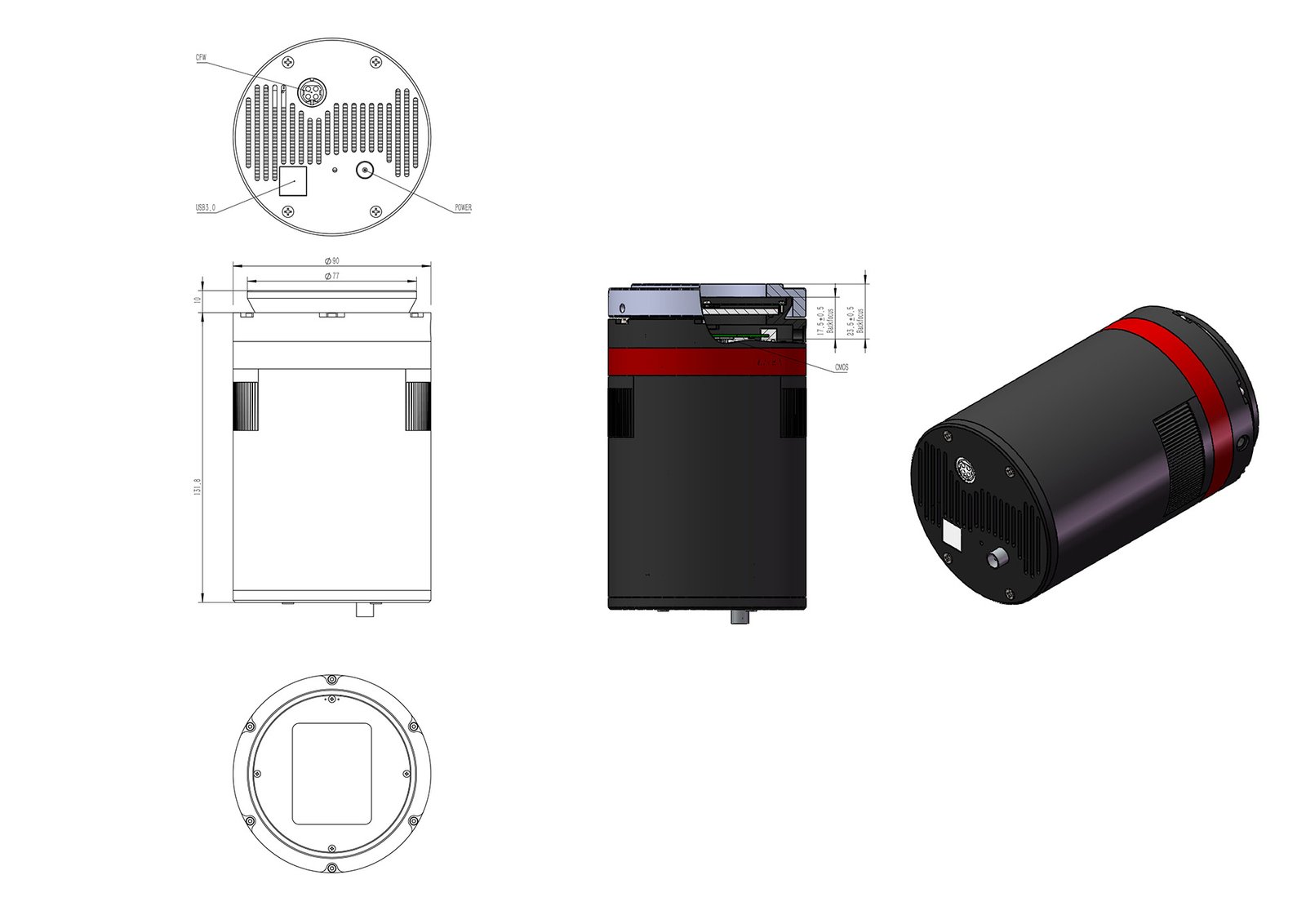
Apart from being available in colour and monochrome, the QHY600 series of astrophotographic cameras is available as standard back focus and short back focus versions.The standard back focus models have a camera angle adjuster (CAA) which attaches to radial dovetail at the front of the camera. The short back focus model only has the six-hole bolt pattern for attaching the camera to the filter wheel. Compare the mechanical drawings and assembly guide to decide which model you need.
This model, the QHY600M-PH, is the monochrome sensor in standard back focus.
QHY600 series astrophotographic cameras
With the advantage of low readout noise and high-speed readout, CMOS technology has revolutionized astronomical imaging. A monochrome, back-illuminated, high-sensitivity, astronomical imaging camera is the ideal choice for astro-imagers. The QHY600 Series uses SONY IMX455, a BSI full frame (35mm format) sensor with 3.76um pixels and native 16-bit A/D. This sensor is available in both monochrome and color versions. The QHY600 Series ends the days of non-16bit cooling CMOS cameras and it ends the days non-full frame (and larger) monochrome cooling CMOS cameras.
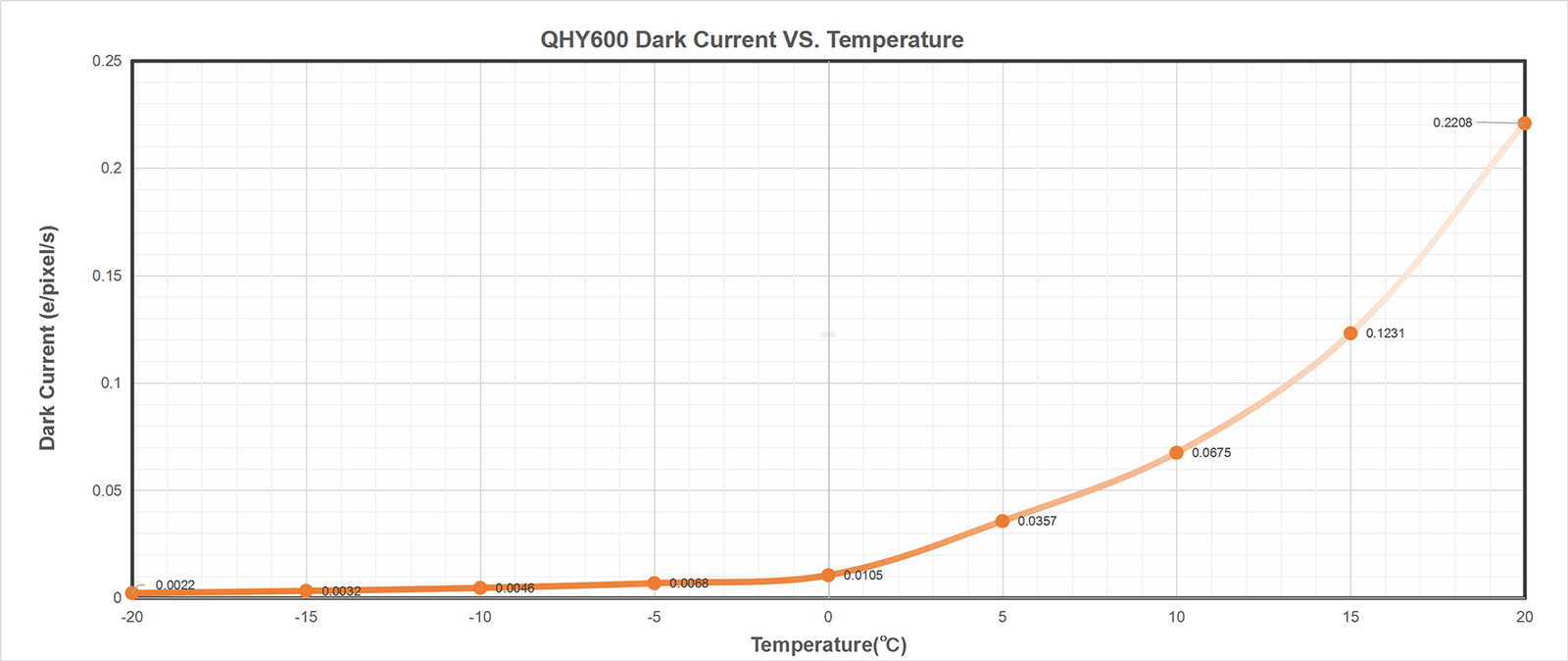
- Extremely low dark current (0.002e/p/s@-20C) using SONY’s Exmor BSI CMOS technology.
- Zero amplifer glow.
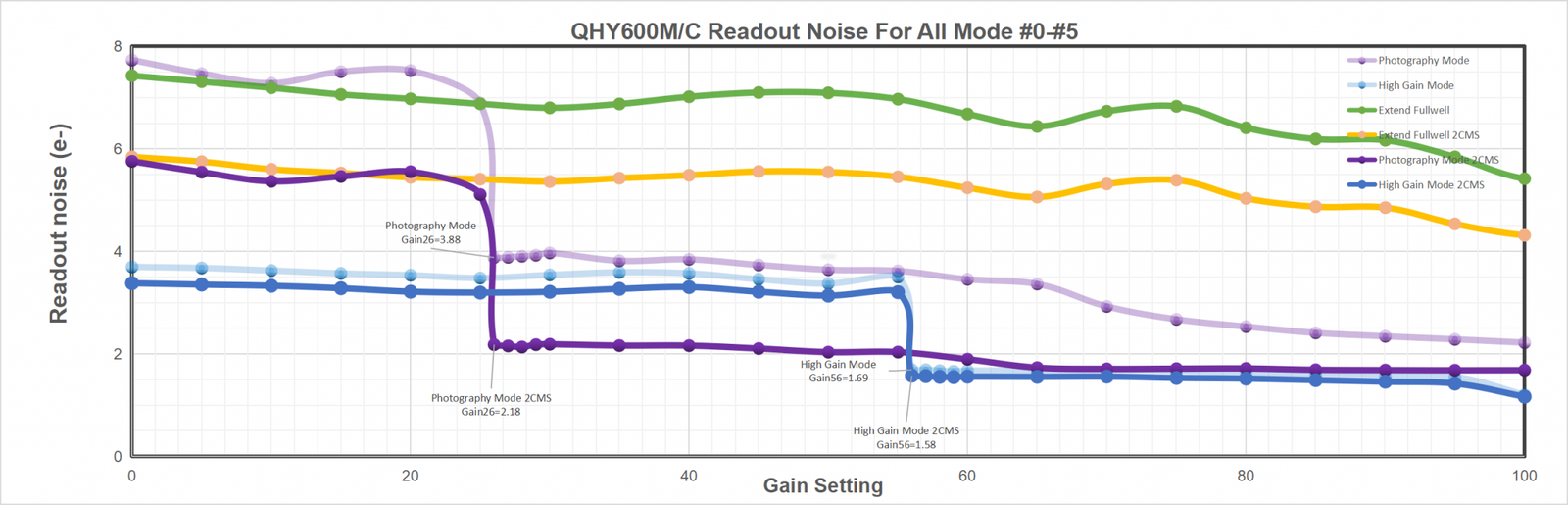
- Only one electron of read noise at high gain and full resolution and 4FPS readout speed. One electron of read noise means the camera can achieve a SNR>3 at only 4 to 6 photons. This is perfect performance when conditions are photon limited, i.e., short exposures, narrowband imaging, etc., making this large area sensor ideal for sky surveys, time domain astronomy, fluorescence imaging, DNA sequencing and microscopy.
In order to provide smooth uninterrupted data transfer of the entire 60MP sensor at high speed, the QHY600 Series (except QHY600M-PH L) have 2GB DDR3 image buffer. The pixel count of the latest generation of CMOS sensors is very high resulting in greater memory requirements for temporary and permanent storage. When using some computers that do not have fast processors or have poor support for USB 3.0, the computer can’t transfer high-speed data well, and the data is often lost. The DDR can buffer a lot of image data and send it to the computer. Even if the USB 3.0 transmission frequently gets suspended, it will ensure that data is not lost.
For example, the QHY600 sensor produces about 120MB of data per frame. The data bandwidth is also increased from the original 16-bits to the current 32-bits. Transferring such a large files necessarily requires the camera to have sufficient memory. This large image buffer meets the needs of high-speed image acquisition and transmission of the new generation of CMOS, making shooting of multiple frames smoother and less stuttered, further reducing the pressure on the computer CPU.
Features
Multiple Readout Modes
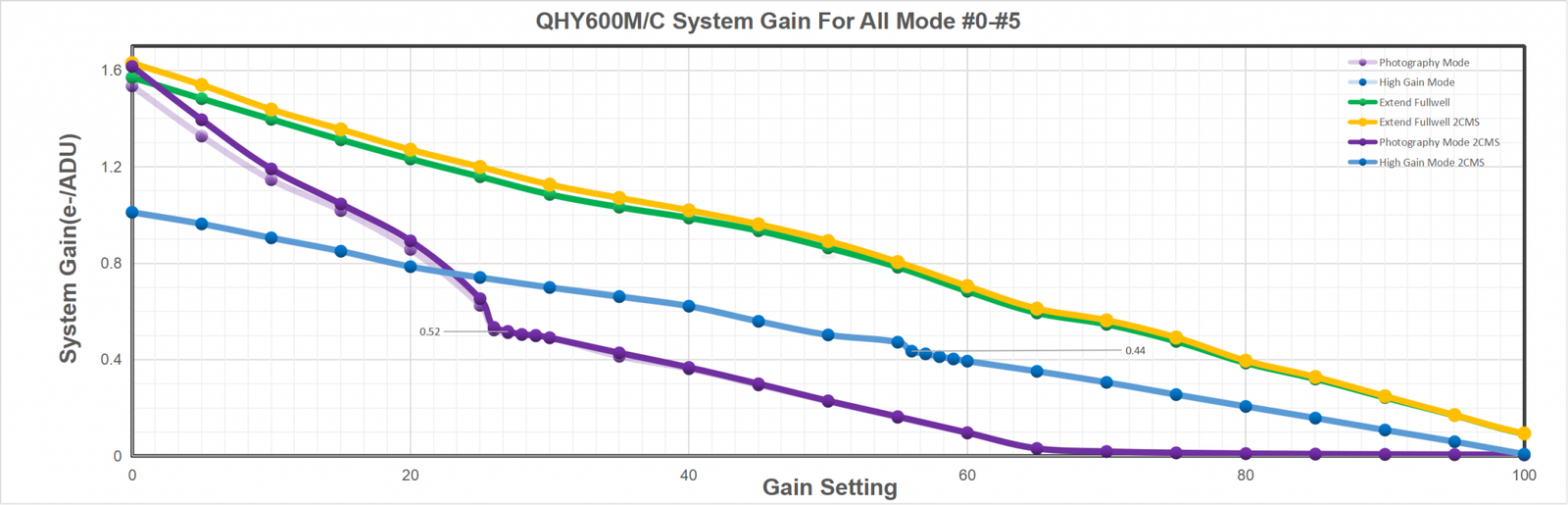
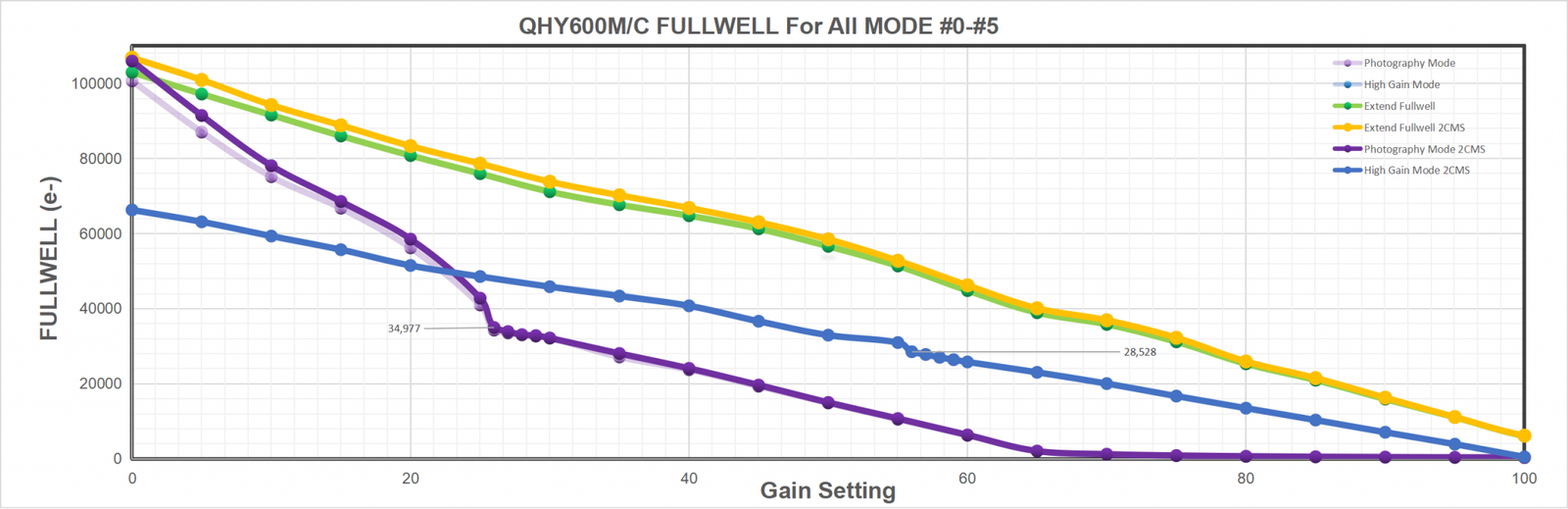
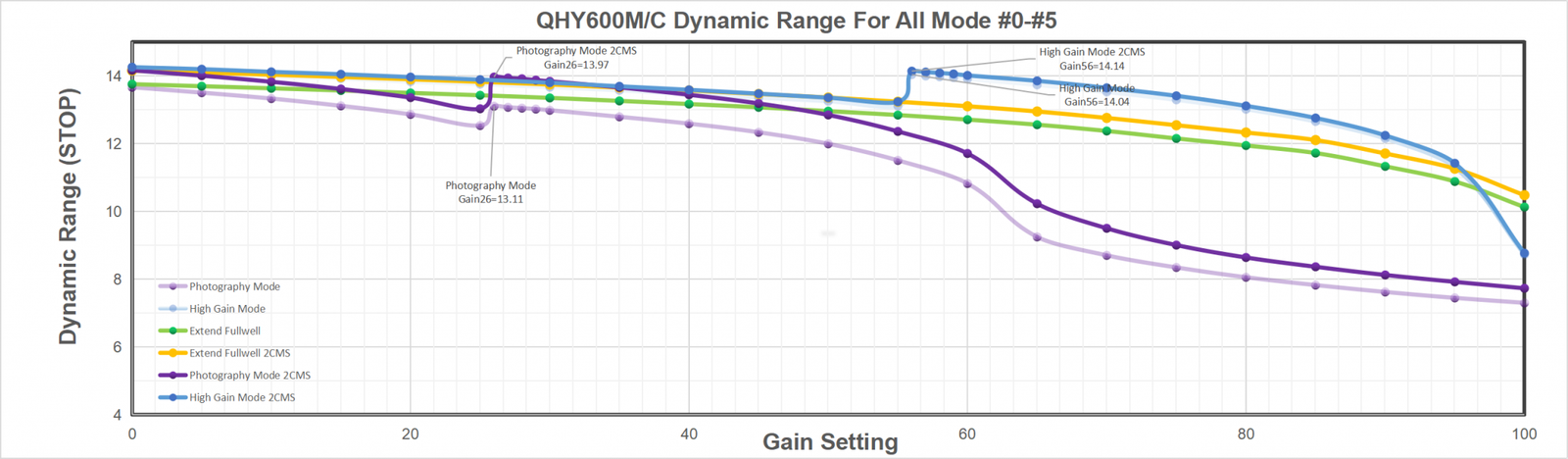
Multiple Readout Modes are special for QHY 16-bit Cameras (QHY600/268/461/411). Different readout modes have different driver timing, etc., and result in different performance. See details at “Multiple Readout Modes and Curves”.
Native 16 bit A/D
The new Sony sensor has native 16-bit A/D on-chip. The output is real 16-bits with 65536 levels. Compared to 12-bit and 14-bit A/D, a 16-bit A/D yields higher sample resolution and the system gain will be less than 1e-/ADU with no sample error noise and very low read noise.
BSI
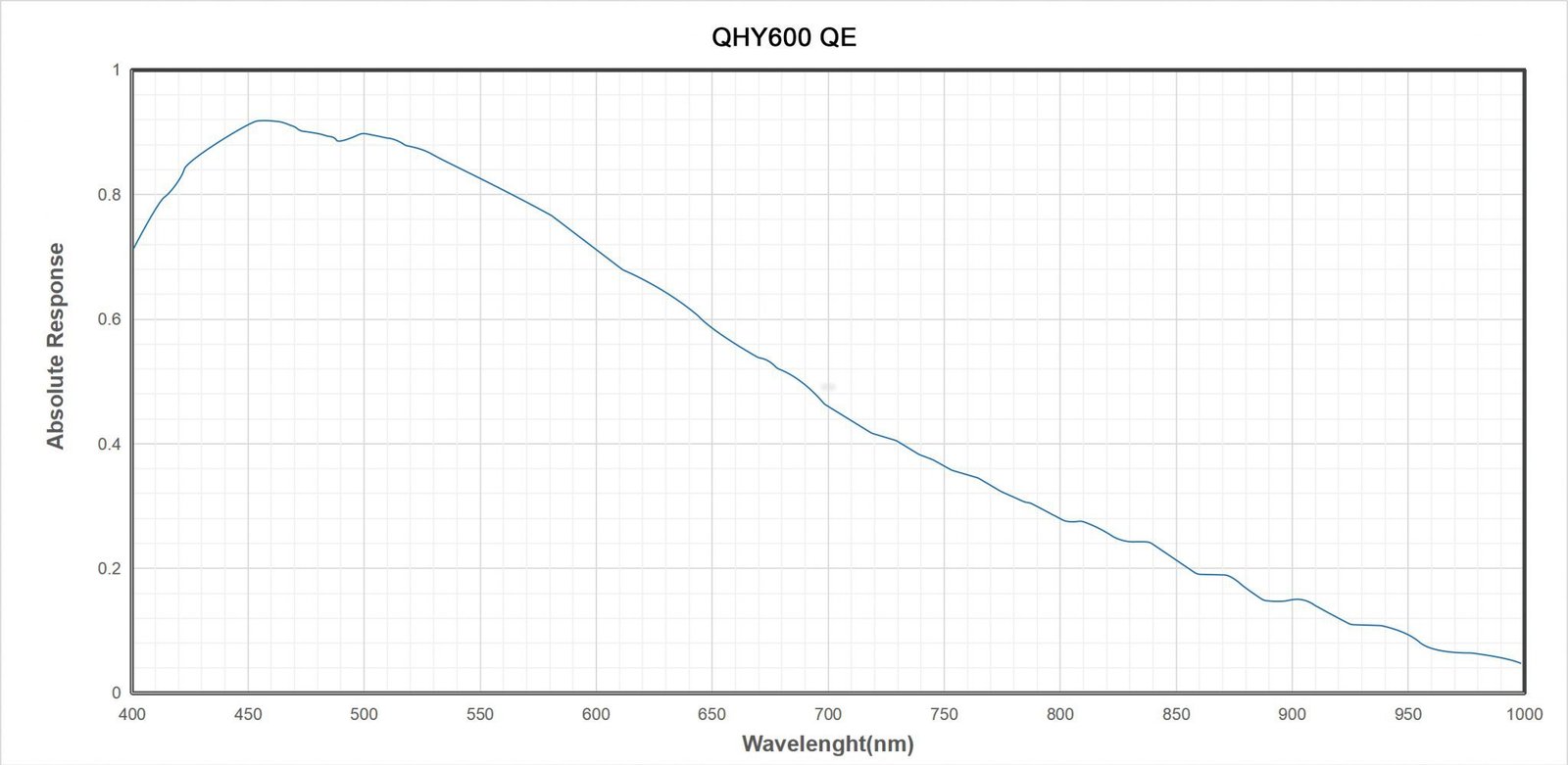
One benefit of the back-illuminated CMOS structure is improved full well capacity. In the back- illuminated sensor the light is allowed to enter the photosensitive surface from the reverse side. In this case the sensor’s embedded wiring structure is below the photosensitive layer. As a result, more incoming photons strike the photosensitive layer and more electrons are generated and captured in the pixel well. This ratio of photon to electron production is called quantum efficiency. The higher the quantum efficiency the more efficient the sensor is at converting photons to electrons and hence the more sensitive the sensor is to capturing an image of something dim.
TRUE RAW Data
In the DSLR implementation there is a RAW image output, but typically it is not completely RAW. Some evidence of noise reduction and hot pixel removal is still visible on close inspection. This can have a negative effect on the image for astronomy such as the “star eater” effect. However, QHY Cameras offer TRUE RAW IMAGE OUTPUT and produces an image comprised of the original signal only, thereby maintaining the maximum flexibility for post-acquisition astronomical image processing programs and other scientific imaging applications.
Zero Amp Glow
This is also a zero amplifier glow camera.
Cooling & Anti-dew Control
In addition to dual stage TE cooling, QHYCCD implements proprietary technology in hardware to control the dark current noise. The optical window has built-in dew heater, and the chamber is protected from internal humidity condensation. An electric heating board for the chamber window can prevent the formation of dew.
Sealing Technology
Based on almost 20-year cooled camera design experience, The QHY cooled camera has implemented the sealing control solutions. The sensor itself is kept dry with our silica gel tube socket design for control of humidity within the sensor chamber. By the way, there’s no oil leaking.

Reviews
There are no reviews yet.