Tutorials

Protect your observatory! Setting up safety equipment
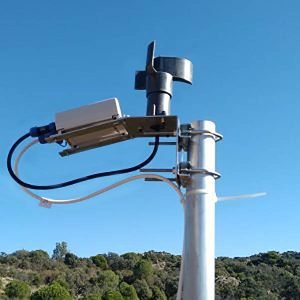
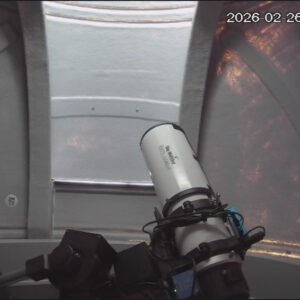
With a dome, you can simply open it up and begin imaging. But if you want to sleep as well, you need something keeping an eye on the weather so the dome will close if it’s about to rain. In this blog I’ve described a couple of gadgets that can do all that for you. I also talk about a couple of options to put the system together.

Read More

Diffraction spikes – what they are and how to get them right

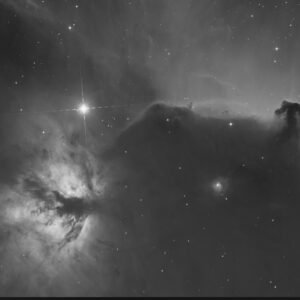
Have you noticed that some astrophotographs have diffraction spikes coming from bright stars? They’re caused by the secondary mirror holder in reflector telescopes. Spiders, as they’re known, can give you nice spikes, but if they’re crooked or uneven, the spikes can look horrible. Here, I’ll show you how to get perfect spikes.

Read More

Asteroids comets and minor planets – find them using orbital data

Asteroids and other objects such as comets and even space junk are hard to find when they pass close to the Earth because their motion relative to us is so fast. Normal planetarium programs can’t track them. This blog shows you how to find and download up-to-date official data so you can locate them with your go-to telescope.

Read More

Choosing the right shutter release cable for your camera

With a shutter release cable you can fire your camera remotely without touching it. They’re very useful in photography, especially macrophotography and astrophotography. They are available for a huge range of cameras. Choosing the correct shutter release cable for your camera can be difficult. Here is a list of available cables.

Read More

    Need Expert Advice?

    Visual Astronomy, Astrophotography, Microscopy and Macro Photography can be a little complicated sometimes as there are a lot of options. If you'd like to check something before you purchase just let us know and we'd be happy to help!

    Enquire now or call us (03) 9042 2293

    Recent Articles

    Under or oversampling? A very rough guide

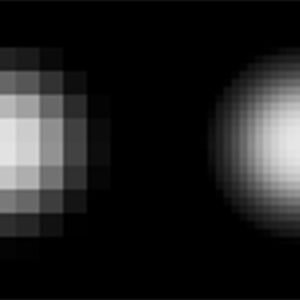
    Sampling rates can make your stars good or blocky, especially if you zoom in. It all depends on a few factors like your focal length, the size of the pixels in your sensor, how good the atmospheric conditions are, and even how good your guiding is. This article shows how to get a combination of telescope and camera that will give you nice smooth stars under a range of conditions.

    Read More