
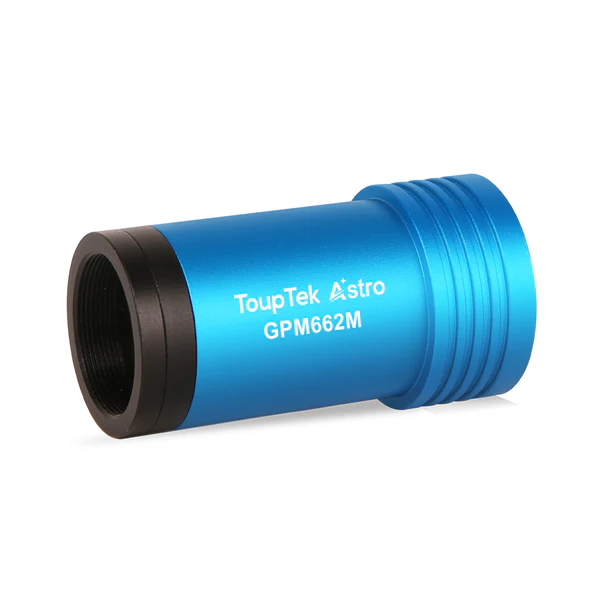
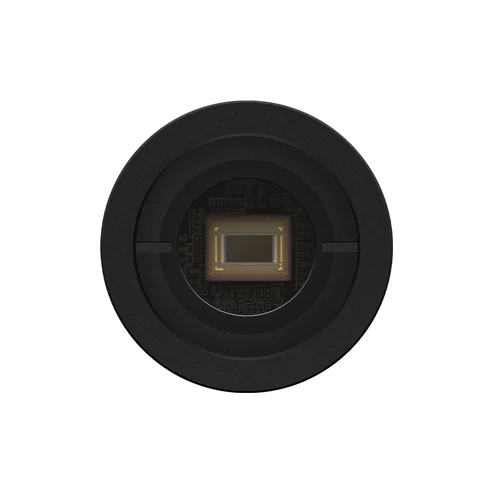
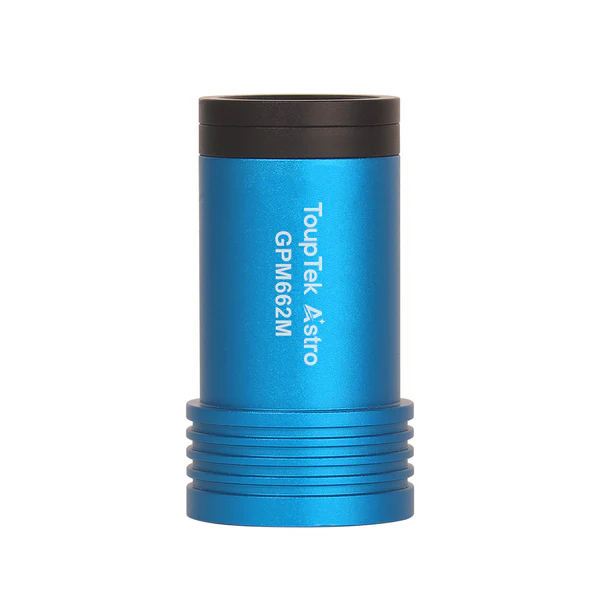
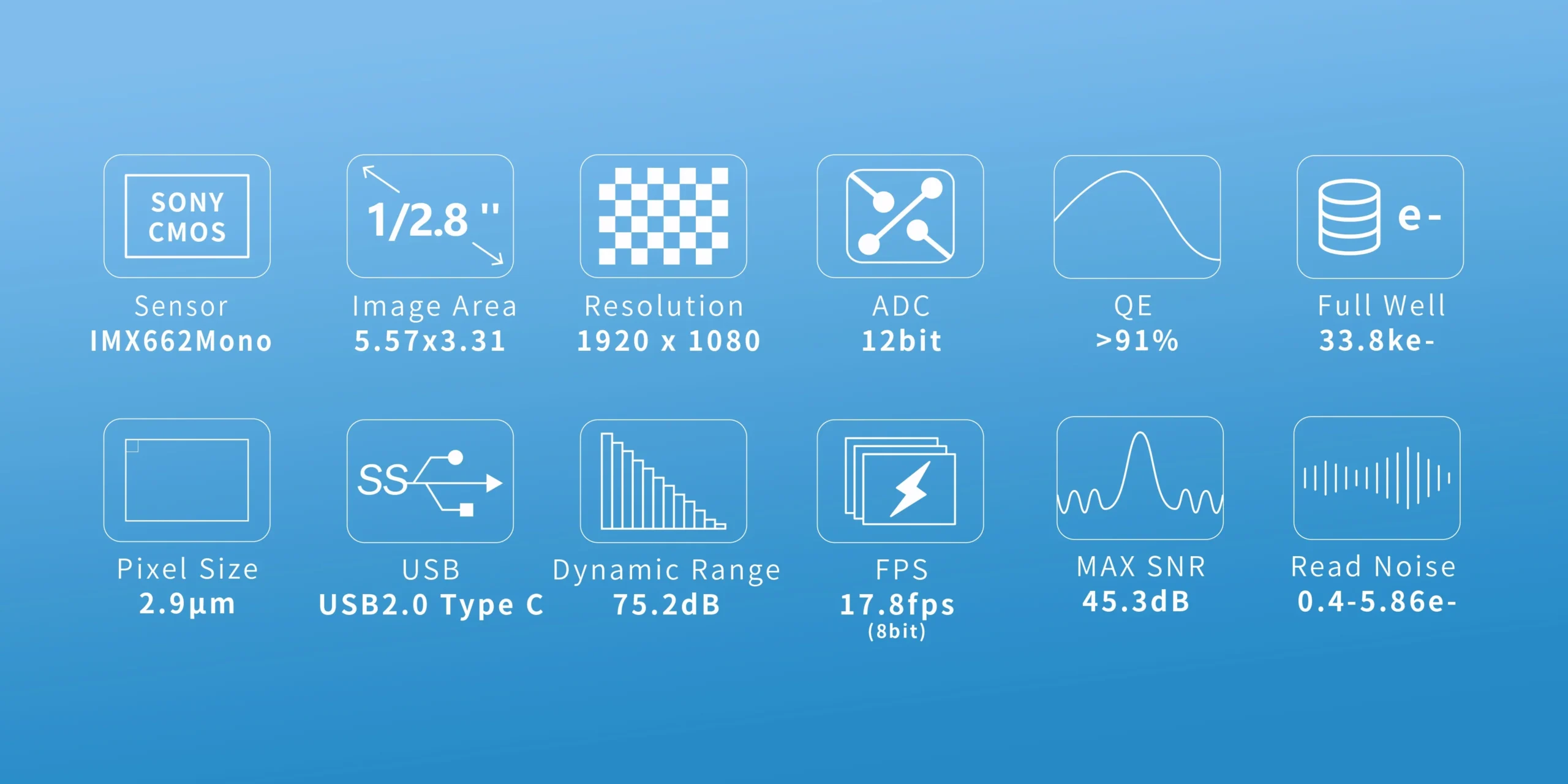
The ToupTek GPM662M is a passively cooled 1.25″ form mono guide camera incorporating the 2.1 megapixel Sony IMX662 CMOS sensor. The camera communicates via USB2 and has 12 bit ADR. The sensor is especially sensitive to near-infrared frequencies. This makes the camera suited to monochrome lunar or planetary photography using a Methane or Infrared filter.
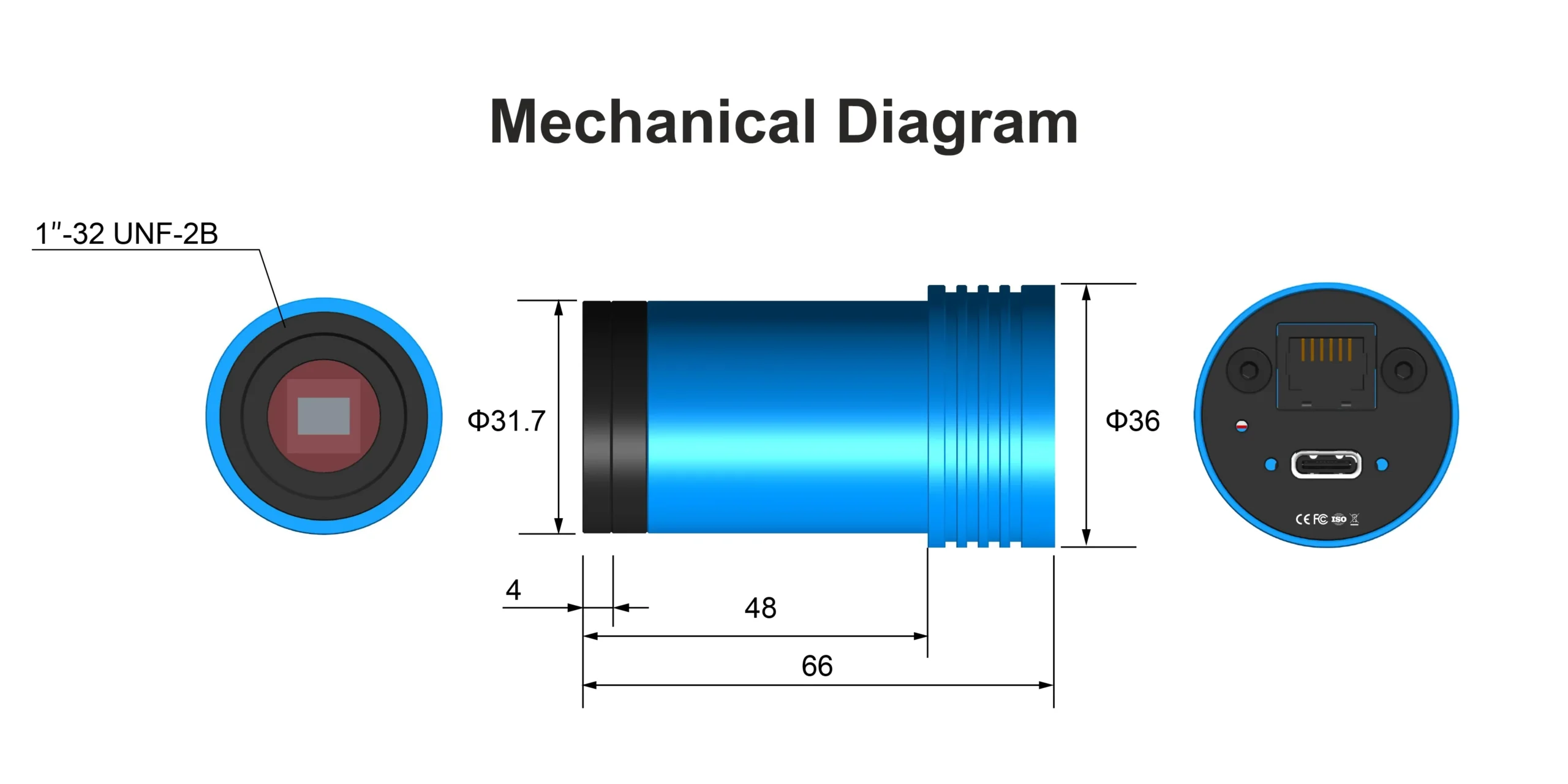
The extended version of this camera has a longer waist than the normal version and is designed to find focus inside popular brands’ off-axis guiders.
The IMX662 sensor in the GPM662M is a 1/2.8″ (5.6 x 3.1mm) sensor with 2.9µm pixels. If your telescope has a focal length of less than 300mm, you will be comfortably able to fit the full Moon onto the sensor. It can also be used to imaging the larger planets.
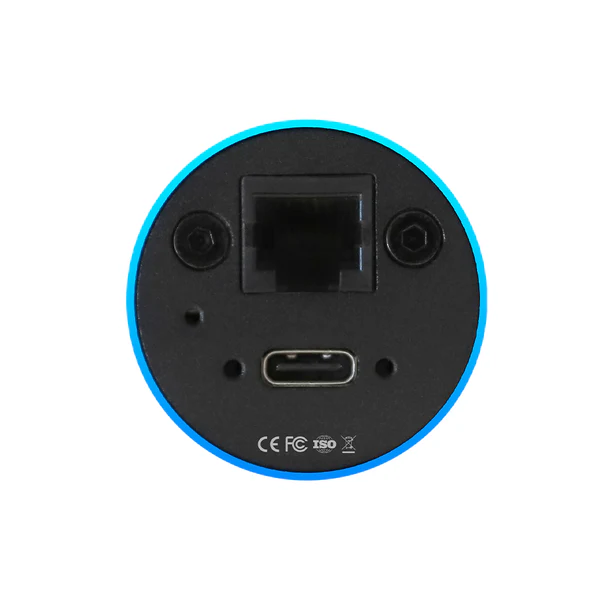
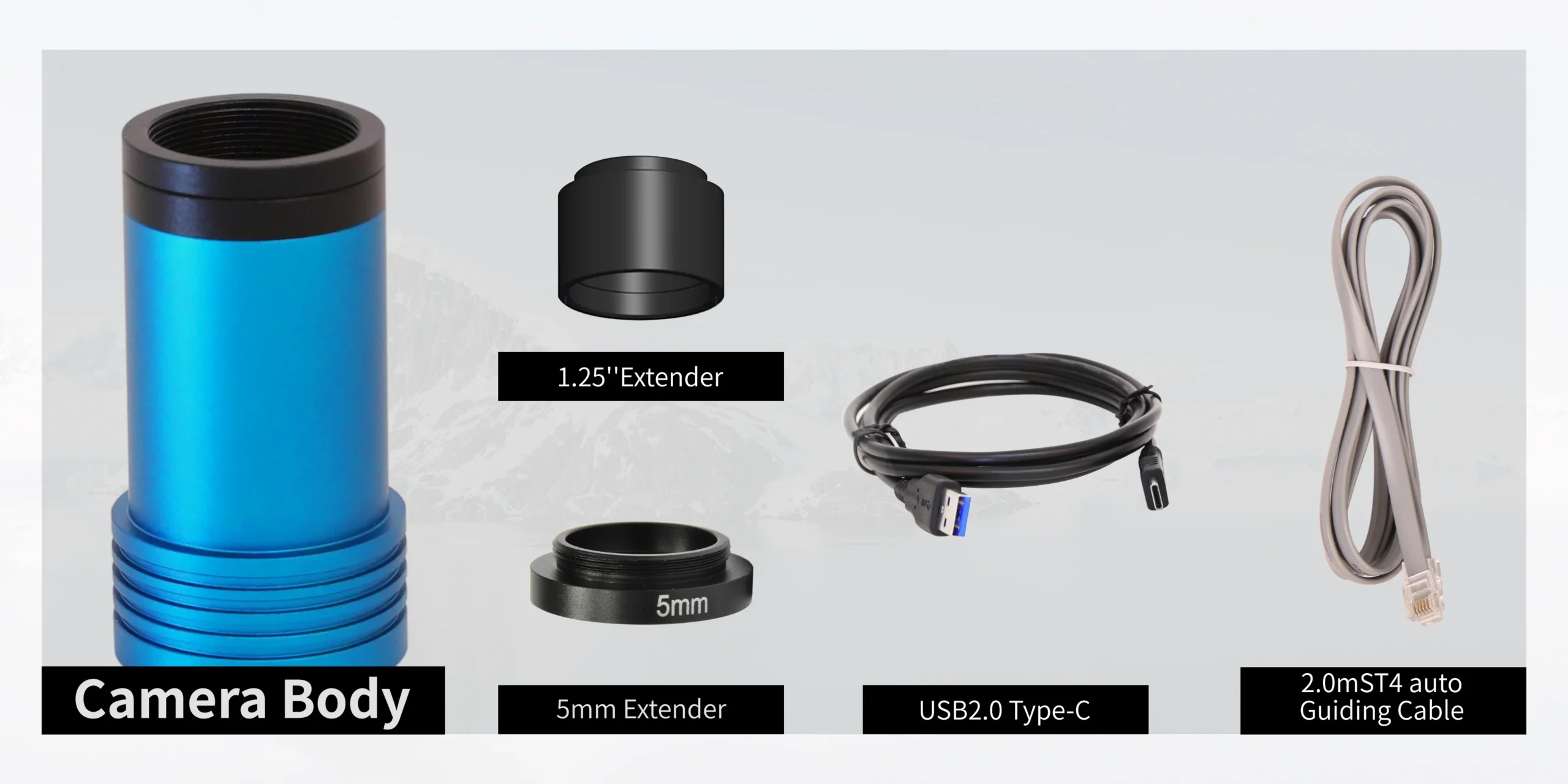
The camera communicates with the computer using a Type-C USB2.0 cable (included with the camera) and can achieve up to 17.8 frames per second. The camera has a native driver, and an ASCOM driver is also included. This means that all popular image acquisition software may be used with the camera. In addition to this, the camera comes with the advanced video and image processing application ToupSky.
The GPM662M can also work as an autoguiding camera, and an ST-4 port and cable are provided, which allows ST-4 guiding.
 Large Full Well Capacity Resists Overexposure
Compared to the previous-generation GPM462M, the GPM662M features significantly lower read noise and a larger full well charge capacity. This advancement effectively suppresses image overexposure, especially under low-light conditions, capturing clearer celestial images with dramatically improved image quality.
High-Compatibility Front-End Design
Extended Version (CS-mount): Longer front barrel with shorter flange focal distance, ensuring compatibility with OAGs from more brands.
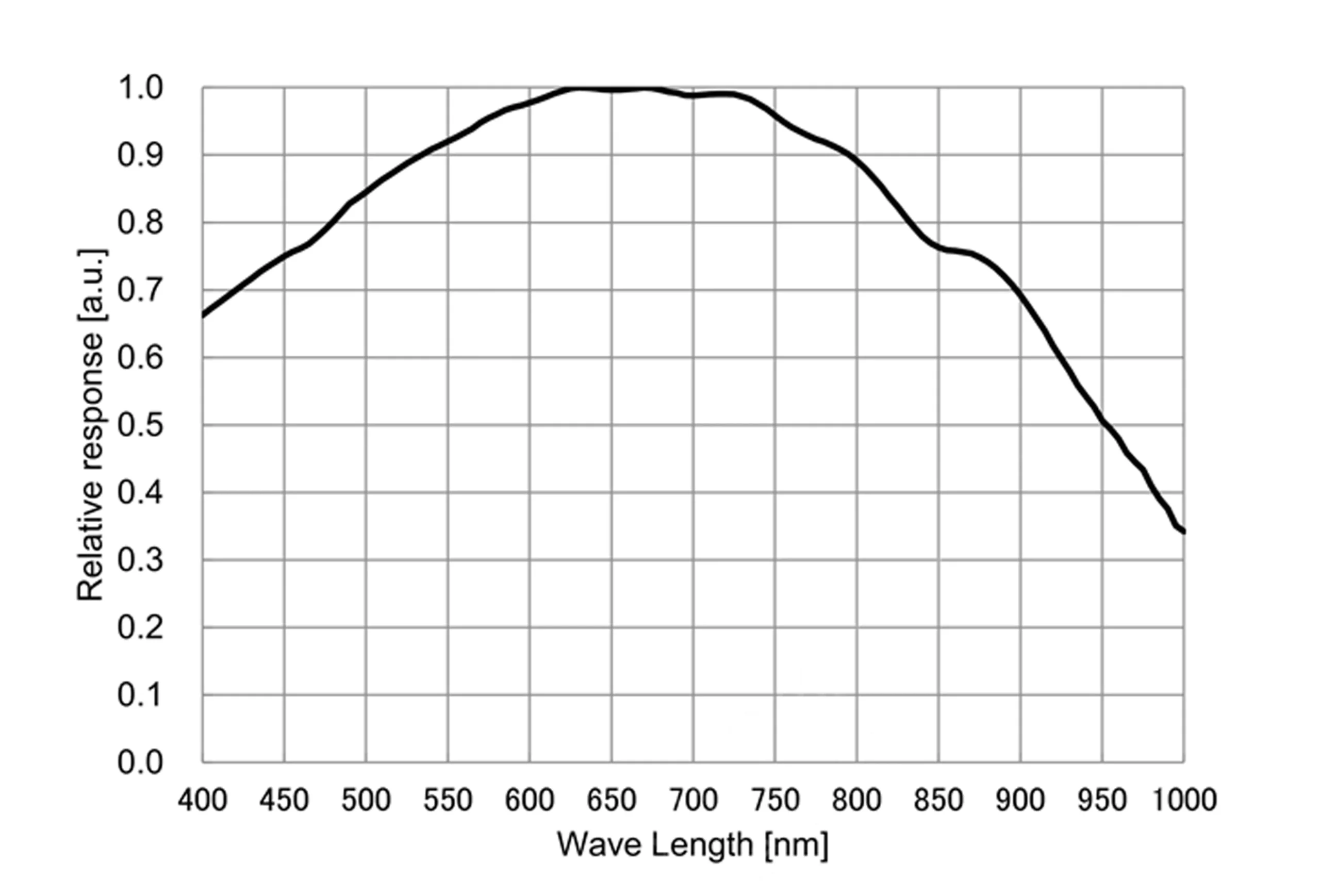
Extended Infrared Sensitivity
The monochrome GPM662M extends its spectral response to 1100nm, providing exceptional performance in near-infrared wavelengths. This extended range reveals atmospheric details on planets that are invisible in visible light, making it invaluable for advanced planetary imaging with methane and IR-pass filters.
Built-in Frame Buffer
Ensures stable data transmission and effectively reduces amp-glow, maintaining maximum frame rates even with multiple cameras operating simultaneously.
ST4 Auto-Guiding Port
Built-in ST4 port transforms the GPM662M into a dual-purpose imaging and precision autoguiding camera for complete imaging control.
Hardware ROI & Binning
Hardware-based ROI increases frame rates for guide star tracking. Digital binning from 1×1 to 8×8 in both stacking and averaging modes.
12-bit ADC
High bit-depth analog-to-digital conversion preserves subtle tonal gradations and provides 4096 levels of brightness data.

Reviews
There are no reviews yet.