Tutorials

Using Lunt Telescopes to look at the Sun

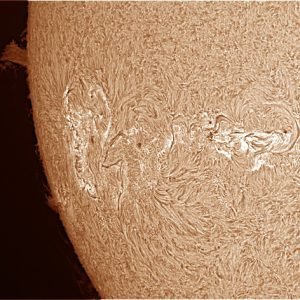
Sun in Ha

With the Australian Solar eclipse coming in 2028, it’s time to get familiar with solar telescopes. With Lunt telescopes you can see the surface of the Sun using white light, or Hydrogen alpha and Calcium-K filters. These all show different aspects of what’s happening there. If you want to photograph it as well, there are cameras for that too.

Read More

Saturn opposition on 8 September 2024

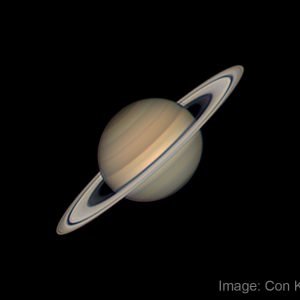
Saturn at opposition 2023. Image: Con Kolivas

Saturn’s 2024 opposition will be on 8 September. Around that time, its rings will appear to glow brighter than usual due to retroreflectivity. Soon afterwards, however, the rings will be edge-on and become entirely invisible.

Read More

Building a truss telescope using truss blocks

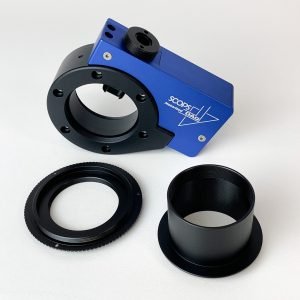
Complete truss block

Getting a good truss system together is hard. The carbon fibre rods have to be held rigidly, but they also have to be able to change the angle they’re sitting at. These truss blocks and ball joints do all that.

Read More

Autoguiding: how much is good enough?

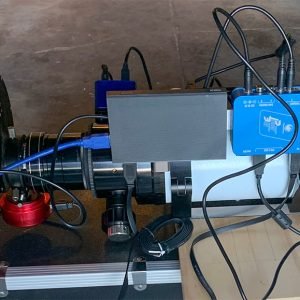
Autoguiding has revolutionised astrophotography. While your main imaging camera is off doing its job, a second camera keeps an eye on a star – any star – in the telescope’s…
Read More

Your first image with the WeMacro Rail

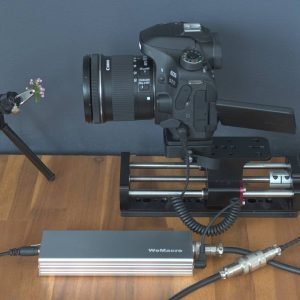
Basic equipment for your first image with the WeMacro Rail

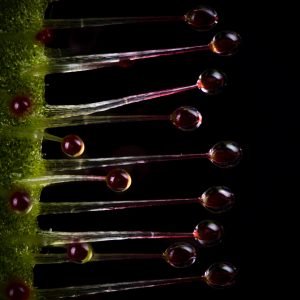
Macrophotography is the art of getting images of tiny subjects onto a camera sensor. I’ve been asked about getting started in macrophotography, and specifically the least expensive way of getting your first image with the WeMacro Rail. This blog shows you how to go out and get your first image, so I’m going to get down to basics.

Read More

Protect your observatory! Setting up safety equipment

With a dome, you can simply open it up and begin imaging. But if you want to sleep as well, you need something keeping an eye on the weather so the dome will close if it’s about to rain. In this blog I’ve described a couple of gadgets that can do all that for you. I also talk about a couple of options to put the system together.

Read More

Diffraction spikes – what they are and how to get them right

Have you noticed that some astrophotographs have diffraction spikes coming from bright stars? They’re caused by the secondary mirror holder in reflector telescopes. Spiders, as they’re known, can give you nice spikes, but if they’re crooked or uneven, the spikes can look horrible. Here, I’ll show you how to get perfect spikes.

Read More

Asteroids comets and minor planets – find them using orbital data

Asteroids and other objects such as comets and even space junk are hard to find when they pass close to the Earth because their motion relative to us is so fast. Normal planetarium programs can’t track them. This blog shows you how to find and download up-to-date official data so you can locate them with your go-to telescope.

Read More

Choosing the right shutter release cable for your camera

With a shutter release cable you can fire your camera remotely without touching it. They’re very useful in photography, especially macrophotography and astrophotography. They are available for a huge range of cameras. Choosing the correct shutter release cable for your camera can be difficult. Here is a list of available cables.

Read More

    Need Expert Advice?

    Visual Astronomy, Astrophotography, Microscopy and Macro Photography can be a little complicated sometimes as there are a lot of options. If you'd like to check something before you purchase just let us know and we'd be happy to help!

    Enquire now or call us (03) 9042 2293

    Recent Articles

    For sale – refurbished QHY600M-Pro camera

    QHY600M-Pro - used
    FOR SALE: QHY600M-Pro Condition: external marking but internally refurbished by QHY. No accessories included. Price $7000 (new price is around $14,000) Contact: Diego on Facebook at https://www.facebook.com/dcolonnello Details This is a…
    Read More